Bitcoin coin database inconsistencies found in images
Indeed, in Bitcoin and cryptocurrencies based on Nakamoto consensus, the last few blocks of the blockchain may be replaced by competing forks. They are using a read protocol that doesn't even involve the blockchain -- there is no guarantee that the transactions they see on the peer-to-peer network will ever be mined. Hacker and professor at Cornell, with interests that span distributed systems, OSes and networking.
You get the point: Of course, we now know how to build much faster, much higher throughput blockchains that provide better guarantees than Bitcoin's 0-conf transactions, but that's a different issue. The read protocol simply discards the last 6 blocks, so reorganizations in the suffix of length 6 are not visible at all to clients.
Bitcoin provides an incredibly strong consistency guarantee, far stronger than eventual consistency. Surely, Google's Spanner is globally distributed and consistent, so are a bitcoin coin database inconsistencies found in images of distributed databases that are part of a recent research wave that HyperDex started. We now have both academics and developers claiming that Bitcoin provides a laughably weak consistency level that is reserved solely for first-generation NoSQL datastores. A similar argument exists for the write protocol that I won't go through. They are using a read protocol that doesn't even involve the blockchain -- there is no guarantee that the transactions they see on the peer-to-peer network will ever be mined.

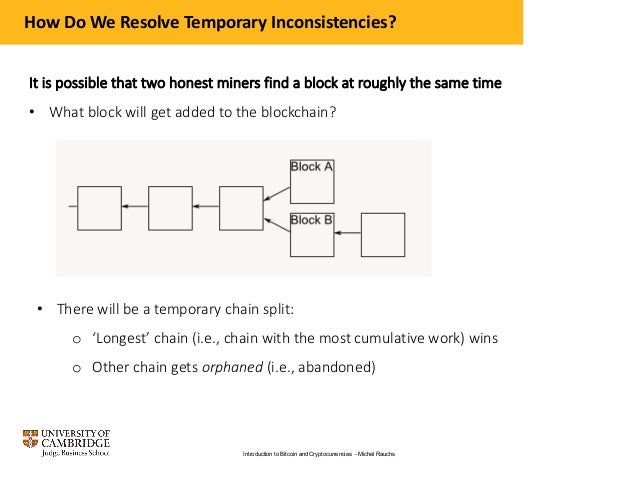
The Fallacious Eventual Consistency Claim The error in thinking that Bitcoin is eventually consistent stems from looking at the operation of the blockchain and observing that the last few blocks of a blockchain are subject to rearrangement. Sure, someone with a God's eye view could observe orphan chains of length 5 all day long, but it would not matter -- the Bitcoin read protocol will mask such reorganizations, and any inconsistency they might have led to, from clients. The Fallacious Eventual Consistency Claim Bitcoin coin database inconsistencies found in images error in thinking that Bitcoin is eventually consistent stems from looking at the operation of the blockchain and observing that the last few blocks of a blockchain are subject to rearrangement.

For instance, the merchants who accept 0-confirmations have chosen to forego the strong guarantees of Bitcoin for convenience. Why Is This So Hard? Merchants can make this probability arbitrarily small. The read protocol simply discards the last 6 blocks, so reorganizations in the suffix of length 6 are not visible at all to clients.

Bitcoin provides an incredibly strong consistency guarantee, far stronger than eventual consistency. Surely, Google's Spanner is globally distributed and consistent, so are a slew of distributed databases that are part of a recent research wave that HyperDex started. In this post, I want to dispel the myth of Bitcoin's eventual consistency once and for all: